
How do you know an HVAC system has reached the end where repairs stop making sense? In Anchorage, AK, the warning signs usually show up together: a compressor pulling more amps every summer, a heat exchanger flagged during the last inspection, repeated refrigerant top-offs on an R-22 or early R-410A system, and utility bills rising while comfort drops. Our test is straightforward. If a repair costs a meaningful share of a replacement and the equipment is past twelve to fifteen years, the fix is likely to buy months rather than years, and the money goes into technology a generation behind today's SEER2 and AFUE standards.
The repairs homeowners call us about most are AC Repair and Furnace Repair. That's the place to start if you need a fix today.
Warning Signs for HVAC Replacement
Recognizing the warning signs early can save you time and money. Watch for these telltale signs:
- Service calls getting more frequent and more expensive
- Refrigerant leaks that need recharging too often, or an R-22 system
- A failed compressor or cracked heat exchanger, the repairs that tip the decision
- Energy bills rising season over season with no change in your habits
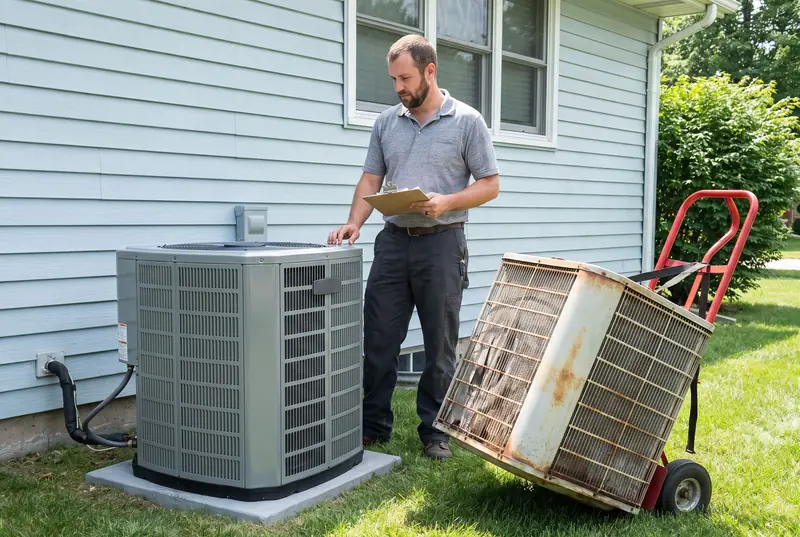
- Rust, soot, or corrosion advancing across the cabinet and coils
- A system so noisy you hear every start and stop
- Persistent comfort problems that no repair has solved
- The system is past the twelve-to-fifteen-year mark and failures are accelerating
Early Action Saves Money
Most HVAC failures start small, a weak capacitor, a squealing blower, a system that runs a little longer each week. If you notice any of these signs, call (406) 204-1174 for a prompt inspection.